The Slush Trauma Recovery Group: Healing After the Wrong Forecast
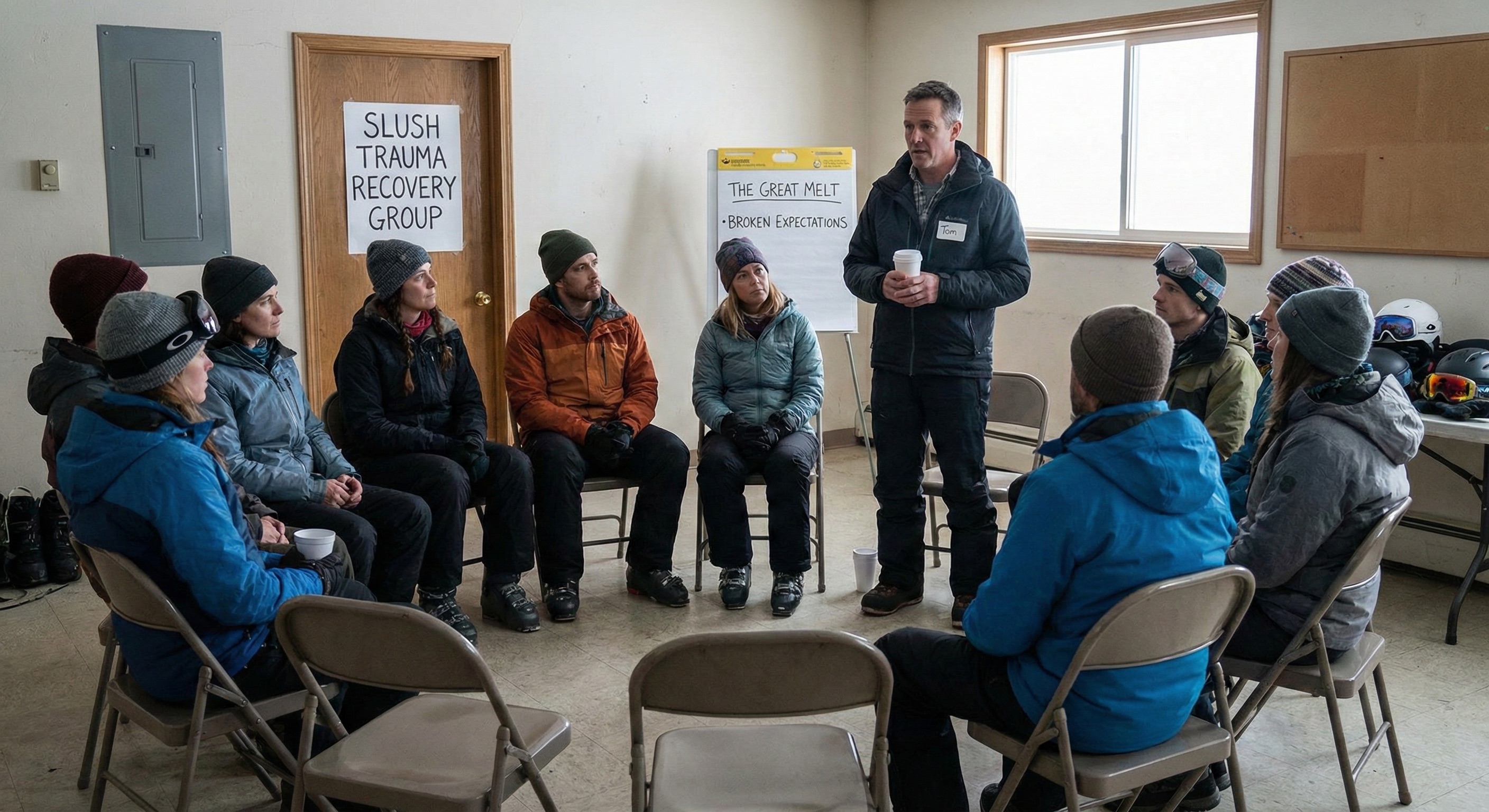
In a rented community center room every Thursday evening, a circle of folding chairs fills slowly.
There are no dramatic confessions. No childhood stories.
Just winter disappointment.
A hand-lettered sign on the door reads: Slush Trauma Recovery Group.
Inside, the meeting begins.
Tom: "Hi, I'm Tom. And I trusted the wrong forecast."
The group responds in unison: "Hi, Tom."
When Powder Turns to Slush
The group was formed after what members now refer to as "The Great Melt."
A widely shared forecast predicted heavy snowfall across several mountain regions. Hundreds booked last-minute trips.
It rained.
Martina: "It wasn't just the snow. It was the anticipation. The planning. The excitement. And then you're standing there in wet socks questioning your life choices."
The group's founder, former marketing manager David K., describes slush as "an emotional event disguised as weather."
David: "Slush represents broken expectations. You don't just lose a ski day. You lose the version of the weekend you imagined."
The Recovery Process
Meetings follow a structured format: share the forecast you trusted, describe the reality you encountered, identify early warning signs you ignored, commit to better data hygiene.
Members are encouraged to cross-check forecasts, analyze elevation-specific data, and consult specialized snow forecasting platforms before making emotional decisions.
David: "Verification is empowerment."
Tom nods.
Tom: "Last weekend, I checked multiple sources. Including positivesnowforecast.com. I almost didn't go. But I went."
"And?" someone asks.
"Thirty centimeters. Dry powder. Blue sky."
The room breaks into applause.
Recovery, it seems, is possible.
As the meeting ends, members gather their jackets. There is cautious optimism in the air.
Slush may still exist.
But denial, they say, no longer does.