The Powder Identity Crisis: The Man Who Rebuilt His Life Around Better Snow Forecasts
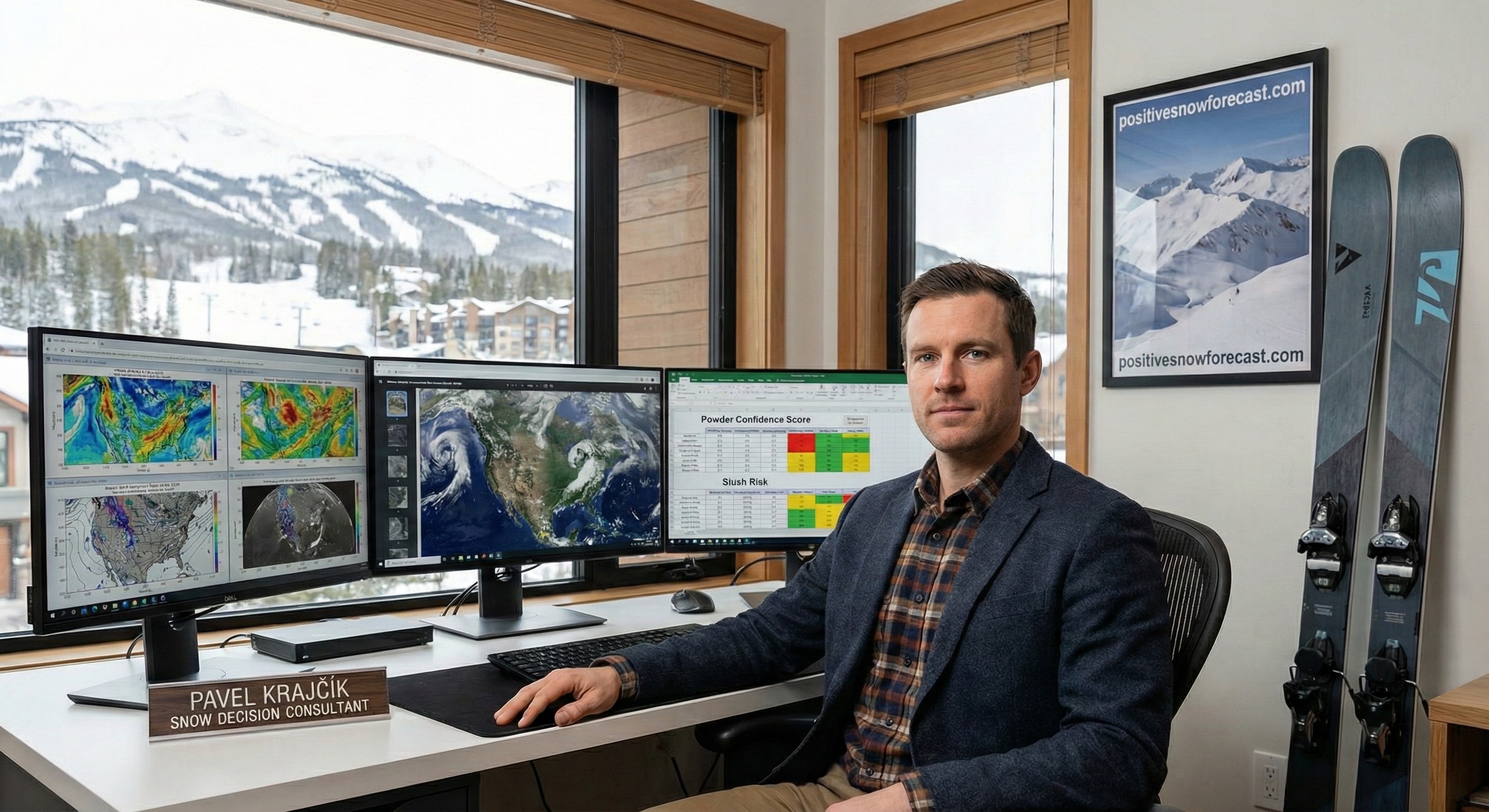
When 39-year-old financial analyst Pavel Krajcik looked back at his life, he didn't see failed investments or broken relationships.
He saw canceled ski weekends.
"For fifteen years," he says, "I planned my winters around inaccurate forecasts. I stayed home when I shouldn't have. I drove into slush when I was promised powder. I built my entire lifestyle on bad data."
It wasn't a dramatic breakdown. It was a quiet realization one Sunday evening, sitting on his couch, scrolling through photos of friends waist-deep in fresh snow.
He had stayed home because the forecast predicted rain.
It had snowed 40 centimeters.
"That was the moment. I realized I didn't have a time-management problem. I had a forecast problem."
The Turning Point
After discovering more specialized snow forecasting sources, including positivesnowforecast.com, Krajcik began re-evaluating his decisions.
He started tracking forecast accuracy. He created spreadsheets. He compared outcomes.
Within a single season, he reports: 63% more successful powder days, 0 slush-related emotional breakdowns, and "significant improvement in winter mood stability."
But the biggest shift wasn't recreational. It was existential.
"I built my career advising clients on risk," he says. "Yet I was making personal decisions based on the first generic weather app I opened. The irony was brutal."
From Analyst to Snow Decision Consultant
In 2025, Krajcik resigned.
Today, he works as a self-described Snow Decision Consultant, advising clients on whether to cancel, postpone, or commit to mountain trips based on multi-source forecast analysis.
His services include: forecast verification audits, weekend probability assessments, "powder confidence scoring", and slush risk evaluation.
"I don't tell people how to ski," he says. "I help them avoid emotional mud."
Demand is growing, especially among professionals who claim their winter productivity improves when their weekends don't collapse due to inaccurate forecasts.
"I didn't change careers because of snow," Krajicik insists. "I changed because I finally understood how much small, wrong decisions were shaping my life."
Some call it extreme. Others call it clarity.
"Good data. Better weekends. Clear head."